
Agricultural transmission knowledge · United Kingdom
Rotary Tiller Gearbox Selection for Heavy and Light UK Soils
Rotary Tiller Gearbox Selection for Heavy and Light UK Soils is a practical engineering guide for people who specify, repair or purchase rotary tillers and cultivators. The central issue is soil resistance, tine speed, rotor inertia and service factor, viewed through UK operating conditions rather than a generic product description. Buyers around Fenland silts, East Anglian loams and heavy Midlands clay often work with mixed tractor fleets, older implements and short seasonal windows, so a replacement must fit the machine and survive the real load. This guide explains the operating principle, selection evidence, catalogue boundaries, materials, installation, maintenance and companion parts that influence a dependable decision. It does not treat visual similarity as proof of interchangeability and it does not copy competitor ratings into the supplied catalogue models. The source table uses one catalogue entry as a transparent example; final dimensions, rotation, lubrication and interfaces remain subject to the approved drawing.
How the drive works
A gearbox used on rotary tillers and cultivators operates by balancing geometry, strength, lubrication and heat. Gear teeth create the chosen speed relationship, but the actual transmitted torque is carried through the shaft shoulders, splines or keys, bearing seats and housing walls. Every interface has a tolerance and every tolerance influences contact. If the driven shaft is offset, overhung or connected through an unsuitable angle, bearing load can rise even though the nominal power stays unchanged. Soil resistance, tine speed, rotor inertia and service factor is therefore a system question. Define the ratio convention, calculate speed and torque, identify the rotation, estimate the duty cycle and document any moment or thrust applied by the implement. Then review the oil path, seal environment, venting and mounting stiffness. The representative catalogue data in this article demonstrate how model information is presented, but only the approved order drawing can establish the final dimensions and interfaces for a.
Selection inputs that prevent mismatch
A dependable decision on rotary tiller gearbox starts with the failure that must be prevented: selecting a light gearbox from nominal horsepower without considering depth and rotor width. The input sheet should state the prime mover, PTO speed or motor speed, maximum available power, expected output speed, rotation viewed from a defined shaft end, operating hours, starts per hour and any reversing. For the driven side, record rotor or auger diameter, working width, material condition, overhung load, shaft support and the consequences of a jam. The mounting sketch should show bolt pattern, pilot diameters, shaft centre heights, clearance envelopes and guard space. For replacement work, measure the old unit without assuming that paint colour or a casting resemblance proves interchangeability. Combine soil condition, working width, depth, rotor speed and overload strategy. Ask the supplier to identify the ratio convention and rating basis, and request an outline drawing before release. If the duty is uncertain.
Representative catalogue evidence
| Catalogue model | HC-RC81 |
|---|---|
| Catalogue family | Lawn Mower Gearboxes |
| Listed ratio | 1:1.46 / 1:1.93 |
| Listed power | 80 HP |
| Rated input | 600 rpm |
| Shaft and interface note | 1-3/8 in, 6-spline PTO input; tapered spline output |
| Listed weight | 28.7 kg |
| Catalogue page | 5 |
| Evidence class | Catalogue exact or catalogue-stated wording; confirm the approved drawing for production |
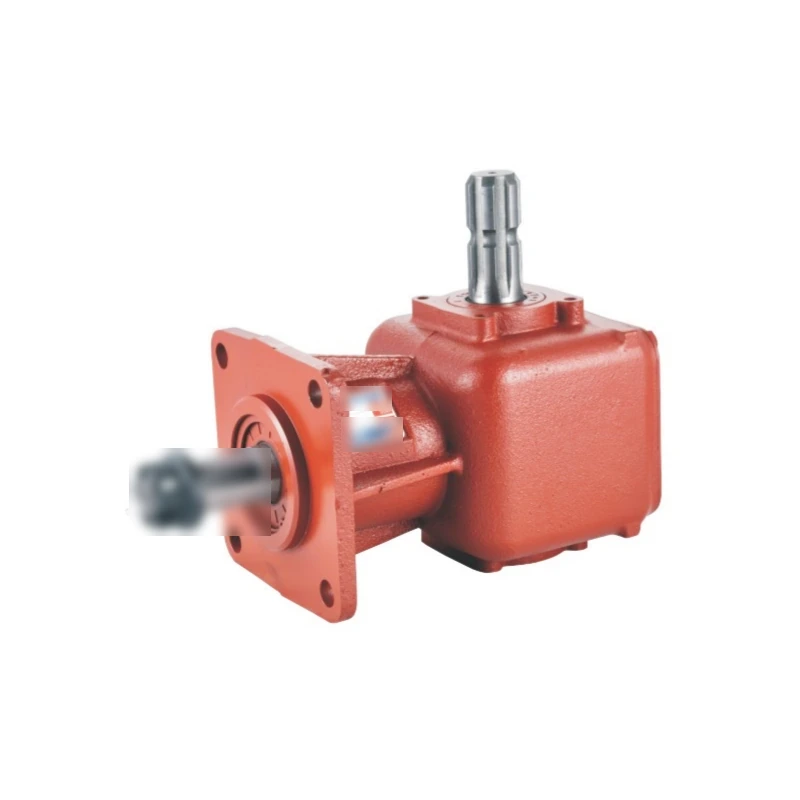
The table presents one representative entry from the supplied 2022 agricultural gearbox catalogue. It is evidence for how a model may be described, not a universal rating for rotary tiller gearbox and not proof that the pictured hero unit is the same model. The listed ratio for HC-RC81 is 1:1.46 / 1:1.93; the catalogue lists 600 as the rated input value and describes the interface as 1-3/8 in, 6-spline PTO input; tapered spline output. Where a field says confirm from drawing or application dependent, it remains unknown rather than being filled with a guessed value. Even a clearly printed power figure needs context: the catalogue may not state the service factor, oil temperature, shock spectrum, overhung load, intended life or exact ratio direction on the same page. A buyer should use the table to prepare questions and to screen families, then rely on a reviewed drawing and written technical confirmation for the order..
UK operating context and safe integration
UK operating conditions make soil resistance, tine speed, rotor inertia and service factor a practical reliability issue. Work around Fenland silts, East Anglian loams and heavy Midlands clay can combine wet vegetation, mud, fertiliser residue, short weather windows and long storage periods. The national agricultural land-use release for 2025 reports 16.8 million hectares of utilised agricultural area and 6.1 million hectares of croppable land, illustrating the range of grassland and arable duties that equipment must cover. That market context does not change the mechanics, but it changes the questions asked of the gearbox: can seals exclude contamination, can the breather avoid water entry, can the oil reach bearings after cold storage, and can the mounting resist impact without distorting? For PTO-driven machines, UK HSE guidance requires properly fitted and maintained guards and warns against adapting a 21-spline 1000 rpm shaft to drive a 6-spline 540 rpm shaft. The gearbox specification should therefore include the.
Gears, shafts, bearings, housings and seals
Material selection for rotary tiller gearbox should be discussed as an engineering requirement because the catalogue entry does not state every material or heat treatment. Common agricultural designs use hardened or case-carburised alloy-steel gears where tooth fatigue and impact resistance are important, with steel shafts sized for combined torsion and bending. Housings may be cast iron, ductile iron, steel fabrication or aluminium depending mass, stiffness, corrosion and production needs. Rolling bearings require the correct internal clearance, fit and lubrication; more bearing capacity will not cure a flexible bracket or excessive overhang. Seal choice can involve nitrile rubber for common mineral-oil service or alternative elastomers where temperature or fluid compatibility demands it, but the seal specification must be confirmed. Shaft surface finish, hardness and runout are as important as the lip material. For rotary tillers and cultivators, coatings and fasteners also need attention because chipped paint, trapped fertiliser and repeated washdown create local corrosion.
Installation and commissioning workflow
Installation for rotary tiller gearbox, with HC-RC81 used only as a representative catalogue reference, should begin before the gearbox is lifted into the frame. Clean and inspect the mounting faces, check that repaired brackets are flat, and compare bolt pattern, pilot features and centre heights with the approved drawing. A housing should sit naturally on its datums; bolts should not be used to pull it into a distorted frame. Turn both shafts by hand, confirm rotation and check that the input and output interfaces engage through their intended length without bottoming. Fit the specified keys, retainers, yokes or couplings and tighten fasteners using the approved procedure. Set the PTO shaft length through the full hitch movement so telescopic sections neither separate nor bottom out, then fit the complete guard and restraint. Fill with the stated lubricant to the stated level, not to an assumed plug. Run a short no-load test, stop, inspect for leakage.
Failure diagnosis and maintenance logic
The most useful maintenance question is not merely whether the gearbox has failed, but how the symptom relates to selecting a light gearbox from nominal horsepower without considering depth and rotor width. A sharp load-related knock can point toward excessive backlash, loose mounting or damaged teeth; a speed-related whine can reflect mesh alignment, tooth condition or an unsuitable operating speed. Bearing rumble, shaft movement and seal leakage often appear together because a worn bearing allows the shaft to move at the seal lip. Milky oil suggests water contamination, metallic debris indicates internal wear, and repeated oil expulsion may indicate overfilling, heat or blocked venting. Stop the machine safely before inspection, isolate stored energy and refit every guard before testing. Check simple external causes—loose bolts, damaged PTO yokes, bent shafts, wrapped crop and frame cracks—before opening the housing. When internal inspection is justified, preserve shim positions and measure backlash, contact pattern, bearing condition and shaft.
PTO shafts, guards and related agricultural parts
A complete rotary tiller gearbox quotation often extends beyond the central housing. Related parts can include the PTO shaft, telescopic tubes, universal joints, yokes, guards, restraint chains, shear-bolt yokes, slip clutches, overrunning clutches, keys, retaining hardware and protective cones. On the implement side, companion items may include blade carriers, pulleys, sprockets, roller chains, couplings, bearings, seals, gears and shafts. These parts should not be bundled by assumption: their torque capacity, speed, rotation, dimensions and guarding must be checked against the same duty. A PTO shaft that is too long can bottom out and load the gearbox bearings; one that is too short can separate during hitch movement. A slip clutch that has rusted solid no longer limits torque, while an incorrect shear bolt can raise or lower the release level. For service planning, ask whether seals and bearings are standard, whether gears are supplied as matched sets, whether shafts require drawing approval and whether.
Customisation and drawing approval
Custom engineering support for rotary tiller gearbox can address ratio, shaft ends, spline or key geometry, mounting flanges, housing orientation, oil ports, breathers, seals, paint and packaging, but each change affects the approval boundary. A new shaft end may change bearing load or stress concentration; a different ratio can change output speed, heat and gear geometry; a rotated housing may move the oil level relative to bearings. The RFQ should therefore separate required features from preferences and identify the dimensions that interface with the machine. Useful evidence includes a dimensioned drawing, 3D model, old-unit photographs, sample shaft or mating part, load calculation, duty cycle and target annual quantity. The manufacturing review should return a controlled outline with revision number, materials or processes that require approval, inspection plan and any deviations. Ask how tooth contact, backlash, runout, leakage and no-load operation will be checked. This structured customisation route is more reliable than requesting a visually.
Illustrative UK project case
Illustrative UK project scenario — this is a fictionalised composite for procurement training, not a verified customer claim. A machinery repair team near Kent needed to address selecting a light gearbox from nominal horsepower without considering depth and rotor width on rotary tillers and cultivators. The old unit had no dependable plate, and the first replacement candidate looked similar but placed the output shaft several millimetres outside the guard line. The team measured the bolt pattern, pilot, centre heights, exposed shaft lengths, spline count and rotation; it also recorded PTO speed, operating angle, working width and the event that caused the original failure. A calculation linked the required output speed to the defined ratio convention, while a service review identified the need for an overload device and a complete guard. The quotation was revised around a controlled drawing rather than a catalogue photograph. During installation, the bracket was corrected so the housing sat without.
Illustrative evaluation comments
Example evaluation statement, not a real endorsement: “The measurement sheet exposed a shaft-centre mismatch before the rotary tiller gearbox order was released, saving a frame modification in the workshop.”
Example evaluation statement, not a real endorsement: “The supplier comparison became much clearer once ratio direction, guarding, PTO shaft scope and approved drawing revision were placed on the same page.”
Example evaluation statement, not a real endorsement: “The inspection sequence linked oil leakage to bearing play instead of treating the seal as an isolated part, which changed the repair decision.”
Questions UK buyers often ask
How much does a rotary tiller gearbox replacement cost for machinery operating in Cumbria?
For rotary tiller gearbox, catalogue reference HC-RC81 is only a representative comparison point, not an automatic interchange claim. Price depends on ratio, power and torque basis, shaft geometry, mounting, material, quantity, testing, guard scope and delivery. Send photographs, dimensions, PTO speed, rotation, duty cycle and the old failure details.
What information should I send a UK supplier to receive an accurate rotary tiller gearbox quote?
For rotary tiller gearbox, catalogue reference HC-RC81 is only a representative comparison point, not an automatic interchange claim. Provide the machine type, tractor or motor data, input and output speeds, rotation, operating hours, shock events, bolt pattern, centre heights, shaft details, lubricant position and clear photographs.
Which rotary tiller gearbox specification suits rotary tillers and cultivators working around Fenland silts, East Anglian loams and heavy Midlands clay?
For rotary tiller gearbox, catalogue reference HC-RC81 is only a representative comparison point, not an automatic interchange claim. There is no safe selection from location or machine name alone. Define the operating load, speed, ratio convention, interface, environment and protection method. Wet crop, clay, stones, fertiliser or long seasonal storage can change the service requirement.
Where can a UK agricultural engineer verify the ratio and shaft interface before ordering?
For rotary tiller gearbox, catalogue reference HC-RC81 is only a representative comparison point, not an automatic interchange claim. A competent agricultural engineering workshop can measure the old unit and mating parts, while the gearbox supplier should confirm the dimensions on an approval drawing. Use ISO PTO terminology and follow current HSE guarding guidance, but do.
When should a rotary tiller gearbox be rebuilt instead of replaced with a new unit?
For rotary tiller gearbox, catalogue reference HC-RC81 is only a representative comparison point, not an automatic interchange claim. Rebuilding can be sensible when the housing and shafts are recoverable, matched gears and bearings are available, dimensions are verified and downtime allows proper inspection. Replacement is often stronger when bores, teeth or shafts are extensively damaged.
Request technical review
Send the machine type, operating speed, required output, rotation, duty cycle, mounting dimensions, shaft measurements, photographs and the condition of the failed unit. Include the PTO shaft, guard, overload device and related parts in the scope when they influence fit or safety. The form is intentionally short; drawings and larger files can be exchanged after the initial enquiry. Use the enquiry form below the article to share the machine details required for a technical review. Do not include confidential production drawings in a public comment field. A controlled quotation should identify assumptions, deviations and the drawing revision that will govern manufacture. For a rotary tiller gearbox enquiry, identify the representative catalogue reference HC-RC81 only when it genuinely helps the comparison; do not use it as a substitute for the machine drawing. State the required delivery scope, including any PTO shaft, guard, clutch, yoke, bearings, seals, gears.